The hits just keep coming.
On Wednesday, On3’s Brett McMurphy published an article (behind the On3 paywall) that includes quotes from Hunter Yurachek. The article walks through how Yurachek is handling the modern world of NIL, and hints that firing him could complicate things for Arkansas.
The piece reads like some PR work for Yurachek’s reputation, and that’s how Arkansas fans are treating it. To be clear, though, there is some truth. Since Yurachek was hired as Arkansas AD, the Hogs in all sports have the most SEC titles of any team in the conference (43). Yurachek’s sudden firing of Mike Anderson back in 2019 now makes a lot of sense, as program spending (not NIL) numbers show that Arkansas began funneling more resources into men’s basketball starting with Eric Musselman’s hiring in 2019. That’s a few million a year that could have gone to football, but instead it went into a sport where the results ended up matching the investment.
According to public records, Arkansas in 2025 spent a higher percentage of its total program investment in men’s basketball (11.5%) than any other SEC program, including Kentucky.
Now John Calipari’s public support of Yurachek makes sense. The best defense of Yurachek is that he’s invested in sports where incremental dollars are worth a lot more in terms of on-field success, either because the sport is small or because the coach and staff are extremely competent.
But does that strategy make sense? Those same public records show that Arkansas’ actual return on invested dollars fell from $1.87 in 2018 (Mike Anderson’s next-to-last season) to just $1.32 in 2025 (Calipari’s first season). Those Hogs invested a lot more money in men’s basketball than they are getting back. The investment probably improved in the 2026 fiscal year, but it didn’t truly pay off in the entire Musselman era despite the success. That’s because although Arkansas’ men’s basketball revenue is three times that of the median SEC team, men’s basketball does not produce enough profit to fund non-revenue sports. Only football can do that.
Arkansas ranks 13th out of 15 reporting SEC teams (Vanderbilt is not required to report) in total athletic expenses. Total NIL numbers are probably similar. Arkansas isn’t going to be top-5, but it should be more toward the middle of the pack. The main reason it is not is because the only reliable money engine – football – is not producing.
Diverting money from football to men’s basketball contributed to success in men’s basketball, but it’s hurting Arkansas athletics as a whole, especially football. Merely having a team that averages seven wins a year would produce more of a revenue increase than a men’s Final Four appearance would, but given the SEC arms race for football, the investment simply is not there to make that happen.
The Athletic ran an article on Thursday highlighting fan anger with Yurachek. This one was less friendly and doesn’t come off as a PR move. And other reporting from On3 highlights the ridiculous financial situation that Ryan Silverfield inherited, including the claim that the rumored “seven-figure donor contribution” that Silverfield secured at a basketball game days after he was hired last year was only made available to him for next year.
All the evidence points to Yurachek’s exit being imminent and Silverfield getting at least another year, even if the program goes 1-11. But it’s not going to be easy to justify keeping him if the Hogs go 1-11. That’s why this Tulsa game is a big deal for Silverfield, for Tim Cramsey, for Ron Roberts, and for a lot of other folks around the program. You have to find a way to sell hope somehow.
The last time a first-year coach was in this bad of a situation, it was Chad Morris in 2018. The woeful Hogs limped into October with only one win, but a 23-0 win over Tulsa provided just enough momentum to get everyone excited for 2019. That turned out to be a failure, but maybe Silverfield can use a Tulsa win to get his tenure back on the right track.
Meet the Golden Hurricane
Tulsa football was born to be underdogs. Having the smallest enrollment among any FBS school didn’t stop them from jumping up from Conference-USA to the American Conference, where they are vastly out-resourced. If they have a good coach, that coach is likely to leave, as Steve Kragthorpe and Todd Graham did in recent years.
Graham is who took them to their highest heights. A defensive guy who made a career of hiring offensive innovators, Graham produced some elite offenses in Tulsa. His 2007 and 2008 offenses coordinated by Gus Malzahn – who had fled Fayetteville after the 2006 season – produced some of the best seasons Tulsa has ever had. The 2008 Tulsa team started 8-0 before falling in a 30-23 thriller in Fayetteville.
After Malzahn left, Tulsa had a down year and then hired Malzahn copycat Chad Morris from the Texas high school ranks, giving him his career start. He would jump to Clemson after that season and Graham left as well, ending Tulsa’s brief run of success.
Tulsa might have another good coach again in Tre Lamb. A career FCS guy, Lamb was a longtime assistant coach before spending four seasons as head coach at Gardner-Webb and one at East Tennessee State, both historically bad FCS programs. At just 37, Lamb is one of the FBS’s youngest head coaches; he played for Tennessee Tech in their 44-3 loss to Arkansas in Fayetteville in 2010.

Tulsa’s 24-10 win over Oklahoma State was one of the stunners of the college football season. The Cowboys turned around and beat 6th-ranked Oregon the very next week. The Golden Hurricane struggled against woeful Sam Houston the following week before crushing East Texas A&M 42-0.
I wrote more about how Tulsa upset Oklahoma State over at Best of Arkansas Sports. Be sure to check out that piece for more on the specific matchups and how Tulsa pulled off that win.
When Tulsa has the ball
NOTE: It’s still early in the season, so advanced stats are directional at best. These will change significantly over the course of the year. Their only value at this point is in telling what each team must do to win.

Arkansas wants to be a bend-don’t-break team under Ron Roberts, which is probably a good call for a team with this level of talent. Against Utah and Georgia, however, they broke way too often. They were unable to get either opponent into must-pass situations and they allowed an almost-unfathomable one-third of a point on every standard downs snap. When they could force passing downs, they were not horrible (minus-0.06 EPA per play, only 5.5 yards per play).
Tulsa will be another methodical offense who wants to stay on schedule. They are very strong on standard downs and bad on passing downs. The key stat is highlighted above: explosive rate on standard downs. Tulsa ranks just 116th in that stat, but they beat Oklahoma State largely because they generated five passing explosives on standard downs. All five came on the three scoring drives that fueled their first 17 points and put the Cowboys in a bad spot (a late Oklahoma State interception set up Tulsa’s final touchdown). They hit two bombs (one an incredible catch), saw OSU lose contain on the edge on two screen passes, and broke a running back free on a dump-off when his man blitzed. Those five plays generated more than 150 yards through the air.
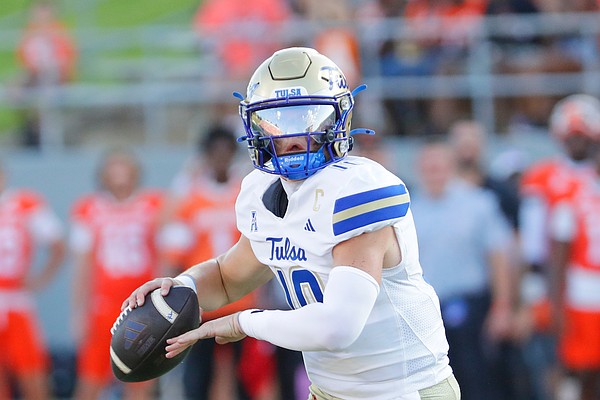
Since that game, Tulsa has not gotten much on early downs passing. And now the quarterback from the Oklahoma State win – Baylor Hayes – is unlikely to play against the Hogs. Backup Dexter Williams II overcome a shaky start against East Texas A&M, but he’s not showing much of a downfield threat. Instead, he’s a bit more athletic than Hayes and more of a dual-threat guy.
Here’s another look at splits by success and explosiveness:

Again, Tulsa’s pass game is a bit iffy from down-to-down, but it’s those explosive passes that fuel the threat. Their run game merely helps them stay on schedule: 29th in success rate, just 135th (out of 138 teams) in explosive run rate. Their best back is Damari Alston, but backup Trequan Jones had an 81-yard run against Sam Houston.
If Tulsa can run all over the Hogs, this will be bad. But I don’t think they will. They got yards here and there against the Cowboys but those big passes were essential to them moving the ball. I think the focus has to be on preventing those.
When Arkansas has the ball

Arkansas’ standard downs offense is bad primarily because the Hogs cannot run the football. Without a strong run game or an ability to generate big plays, they have see KJ Jackson complete 35 passes in order to have a chance to win. That’s not a sustainable model at all. The design of the offense plays a role in the lack of explosives, but the inability to run is a lack of execution (likely talent-driven, but still).
If Arkansas is going to run on anyone for the rest of the year, it will be Tulsa. It’s critical that the run game works.

We see that while Arkansas’ offensive line is bad (98th in line-yards), it’s at least not allowing run stuffs (31st). Oh, and the running backs look much worse. Only 39% of rush attempts gain at least four yards (134th) and the Hogs are only getting 4.0 additional yards on those opportunity runs (127th).
Tulsa’s top-line numbers look good, but the bottom numbers tell a different story. They aren’t stuffing runs (116th) and they are getting bullied for the first three yards on every rush (124th in line-yards). They are solid at stopping runs after that (17th in opportunity runs).
For Arkansas, getting three yards on every rush would be a major upgrade. That would help the offense stay on schedule and help give the quarterback some help.
Through the air, Tulsa is getting some decent pressure but their biggest wins have been simply keeping everything in front. Oklahoma State failed to hit any big pass plays and that allowed Tulsa to wait for the Cowboy offense to shoot itself in the foot, which it did repeatedly.
Keys to the game
Keep the pass-catchers in front. Tulsa’s offensive success against Oklahoma State was largely driven by explosive passes. Without them, the Golden Hurricane will have to sustain very long drives in order to score. Georgia did against Arkansas, but Tulsa is not Georgia. Arkansas must limit huge pass plays.
Find something in the run game. Arkansas’ passing game looked improved against Georgia. I still don’t love it, but there are open receivers and the Hogs are able to move the football through the air. But it’s not going to matter if the run game stays this bad. Tulsa has the weakest run-stopping front left on the schedule. Arkansas should be able to at least stay on-schedule with the ground game. If they can’t, it may truly be time to start worrying about 1-11.
No penalties, no turnovers, no special teams disasters. Part of the pros of Silverfield was supposed to be more disciplined football with fewer mistakes. It’s early, but we are not seeing that. Arkansas is committing penalties, turning the ball over, and had a punt partially blocked against Georgia. In a game where it will probably be close and you have a good chance to win, you cannot make mistakes like that.
One thought on “Matchup Analysis: Arkansas has a chance to give us some hope against Tulsa”